
As an Amazon Associate I earn from qualifying purchases.
I’ve written about what a nursing student needs, and the short version there is: don’t overspend, a Classic III is plenty.
Critical care is where that advice changes.
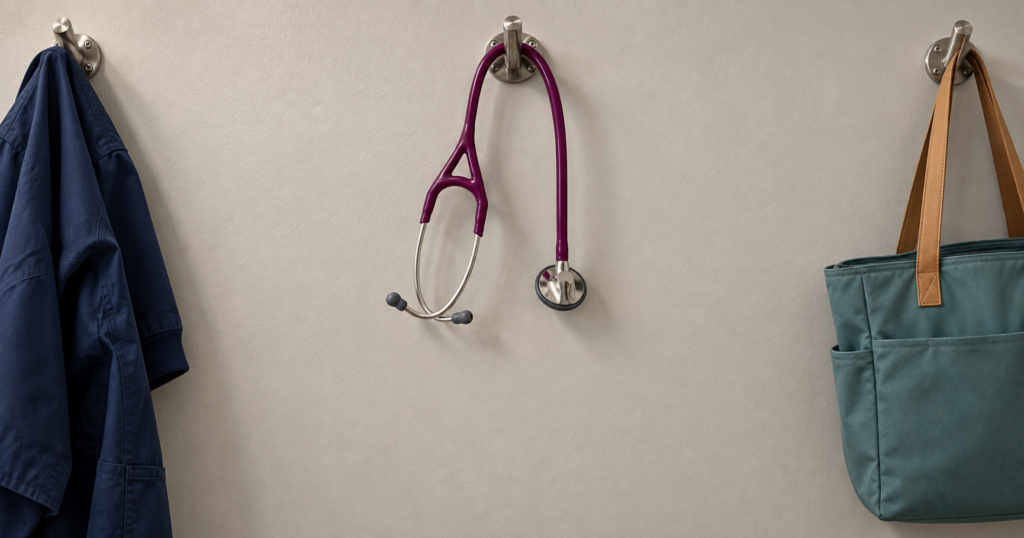
I carried a Master Cardiology when I worked on a cardiac floor, and the difference was not subtle. Here’s what the upgrade actually buys you, and when it’s worth it.
What a cardiology model actually gets you
I could hear dramatically better with the Master Cardiology than with a Classic.
Specifically:
Heart sounds. This is the big one. Sounds I struggled to pick up with a Classic came through clearly. On post-open-heart patients, where you’re often listening for what isn’t there, that matters enormously.
Pericardial and pleural rubs. Much easier to catch. These are exactly the subtle, easy-to-miss findings that a better stethoscope earns its money on.
Manual blood pressures. A genuinely underrated benefit. Manual BPs get much easier to hear, which matters when the automatic cuff is arguing with you and you need a real number.
Is it necessary?
No. But if you can afford it, it’s worth it.
A Classic III will get you through ICU work. Plenty of excellent critical care nurses use one. I wouldn’t tell someone they’re underequipped.
But critical care asks more of your ears than most settings. You’re listening for faint breath sounds on vented patients, subtle changes in heart sounds, rubs, and bowel sounds on people who can’t tell you anything. The margin a better stethoscope gives you is a real margin.
If the money is there, spend it. If it isn’t, you’re not handicapped.
Earpieces matter more in a loud unit
ICUs are loud. Alarms, vents, pumps, conversation, all of it constant.
Get a stethoscope with earpieces that actually seal. Littmann’s soft eartips form a good seal and block out a meaningful amount of ambient noise. That seal is doing two jobs: delivering what you want to hear and excluding what you don’t.
This is also why fit matters. A stethoscope that doesn’t seal properly in your ears isn’t just uncomfortable… in a noisy unit, it’s actively failing at the job.
Isolation rooms
This is a practical consideration people don’t think about until they’re standing outside one.
Depending on the type of isolation, you may not be able to bring your own stethoscope in at all. Many units keep dedicated stethoscopes in isolation rooms for exactly this reason. Know your facility’s policy.
When your own stethoscope does go in, Littmanns hold up well to Cavi Wipes and Sani-Cloths. They tolerate routine disinfection without the tubing degrading quickly, which is not true of cheaper models.
The dedicated isolation stethoscopes that live in the room are usually terrible. Those cheap disposable ones are nearly impossible to hear through, which is a real problem when the patient in isolation is also the patient you most need a good assessment on.
I’ve seen doctors put a glove over the chestpiece to use their own stethoscope in an isolation room — and you can still hear well through a Littmann with a glove on it. I’ll be honest that I don’t know whether that’s sanctioned practice. Check your own infection control policy before you copy it.
Theft is a real problem
Good stethoscopes walk off. In ICU, where cardiologists and intensivists are in and out constantly, it happens more.
Get a bright or unusual color, if your facility allows it. Something distinctive is much harder for someone to absorb into their own pocket and later claim as theirs.
A hot pink stethoscope has a remarkably low theft rate among male cardiologists. Make of that what you will.
If color is restricted, use a stethoscope ID tag and put your name on it.
Tube length changes with a cardiology model
Most cardiology stethoscopes come with short, thick tubing. Shorter tubes mean less distance for sound to travel, which is part of how they deliver better acoustics.
The trade-off is practical: those aren’t really built to wear around your neck. The chestpiece is heavy, and with a short tube it sits high and loose. Turn around quickly and it can come off — which is a hazard to whoever’s standing behind you.
I prefer a longer tube myself, specifically because I wear mine around my neck and I want it to stay there. If you’re a pocket-carrier or you drape it over your shoulders, the short tube is less of an issue.
Know how you carry it before you pick a length.
Electronic stethoscopes
I haven’t used an electronic stethoscope, so I’m not going to pretend to review them.
I will say they’re my next purchase. This one is the one I am considering. It’s expensive, but I have done my research. I’m in outpatient dialysis now, where patients aren’t critical but your assessment skills carry more weight — there’s no monitor to glance at, so if something’s wrong you need to hear it yourself. Amplification seems genuinely useful for that.
Several models advertise built-in EKG capability. I have no idea how well that works in practice. If you’re considering one, find reviews from people who’ve actually used them in a clinical setting.
What to buy for critical care
- A cardiology model if the budget allows. The acoustic difference on heart sounds and rubs is real.
- A Classic III if it doesn’t. You’ll be fine.
- Good sealing earpieces, non-negotiable in a loud unit.
- A distinctive color, or an ID tag.
- Pick your tube length based on how you carry it, not just acoustics.
- Know your isolation policy before you walk into a room with your own equipment.
And whatever you buy, clean it. It goes from patient to patient all shift, and it’s one of the easiest things in the building to forget about.